

Nexus

The SMU-X course Singapore – Imagining the Next 50 Years, offered by the SMU College of Integrative Studies, is no ordinary course. Developed in collaboration with Nexus, the community engagement arm of Ministry of Defence (MINDEF), the course challenges students to tackle some of Singapore’s most pressing and complex national issues. Nexus champions Total Defence as Singapore’s enduring national strategy, building societal resilience through public campaigns, education initiatives, and groundup collaborations. Together, SMU-X and Nexus invited students to move beyond theory, engaging them as active contributors to the nation’s evolving story.
Each project cycle began with a broad challenge, a real-world issue that cuts across the social, economic, and security pillars of Total Defence. Instead of prescriptive briefs, students received thought-provoking questions: “What would you do if an entire neighbourhood lost power for 48 hours?” “How would you spark commitment to Total Defence in youth who feel distant from the past?”
Students responded with urgency and creativity. Some designed games, others crafted campaigns. One team reimagined an urban garden as a site for cross-generational resilience. Another proposed a digital-first solution to tackle scams through community vigilance.
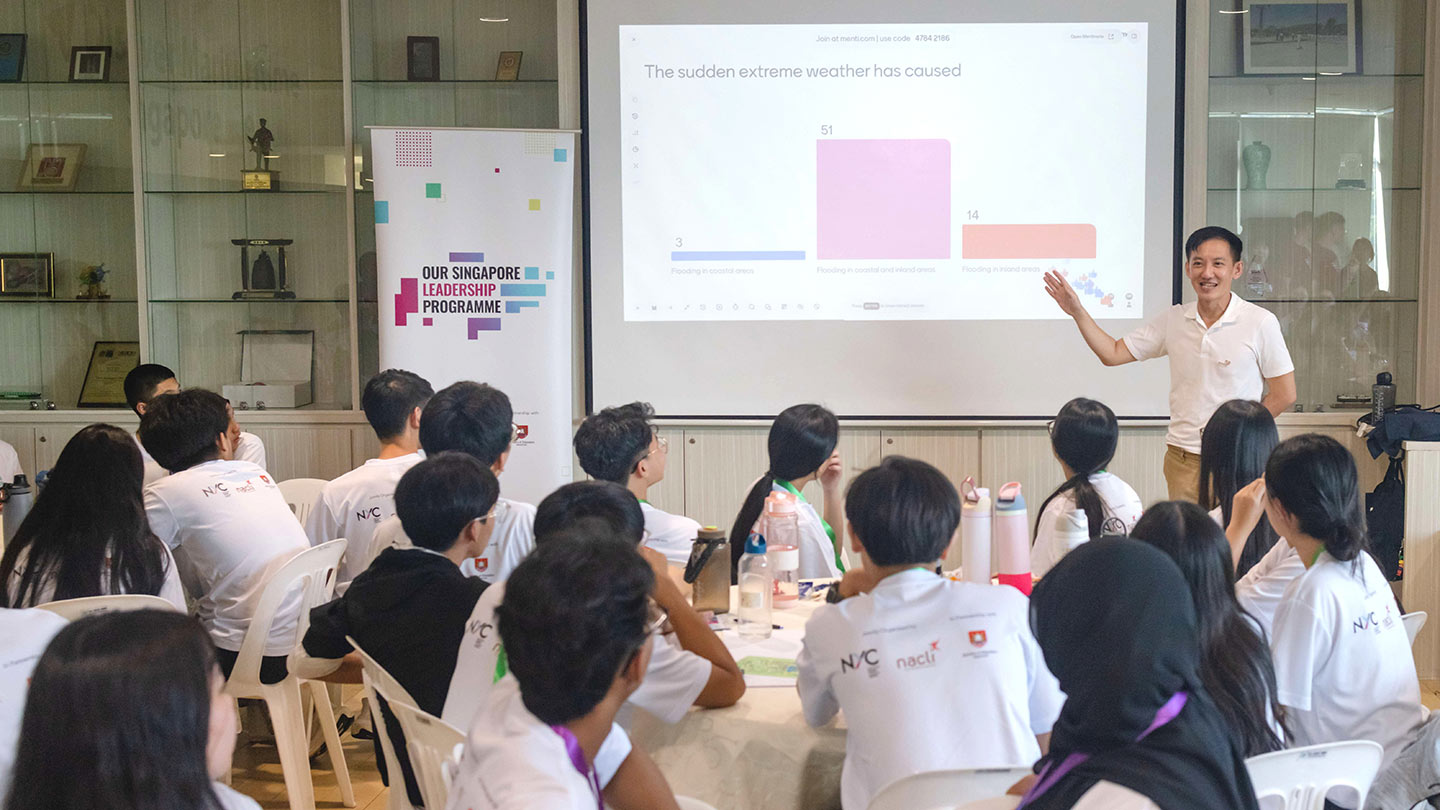
And then came the Tabletop Exercise (TTX). What started as a student idea soon grew into a national prototype. By simulating crisis scenarios such as cyberattacks and food shortages, TTX encouraged participants to think collaboratively, act quickly, and plan strategically. Nexus adopted the TTX package for Total Defence Day 2023, where over 13,000 participants across educational institutions took part.
The freedom to ideate without fixed templates made the course feel real. We were more than solving a case, we were being asked to imagine Singapore’s future, responsibly.
- Eng Jun Hong
“In just one year, over 13,000 participants took part,” said Senior Lieutenant Colonel Psalm Lew, Director of Community Engagement at Nexus. “But it wasn’t just about numbers. What mattered was that the exercise activated thinking – and that’s rare. It’s not easy to get people to reflect on defence as a personal responsibility.”
For Psalm, the real impact of the project lay in its ability to provoke reflection. “The true value of the TTX,” he said, “was in how it sparked critical thinking. It went beyond execution – it activated reflection, urgency, and responsibility. That, to me, is where real impact lies.”
Assistant Professor Aidan Wong, who led the course, reflected on its transformative nature. “It gives students a rare opportunity to sit in the policy seat,” he said. “They begin to see governance as something dynamic, shaped by competing needs, grounded in community, and always evolving.” He added, “Sometimes students need a space to dream aloud about their country. This course goes beyond policy. It invites young people to claim ownership of the questions that will shape their future.”

For Eng Jun Hong, a student involved in the project, the learning was deeply personal. “We learned to balance bold ideas with grounded action,” he shared. “One of my contributions was a process flow diagram that helped make our proposal more concrete. Each of us brought something different to the table, and that diversity made the work stronger.”
He appreciated the course’s creative freedom: “The freedom to ideate without fixed templates made the course feel real. We were more than solving a case, we were being asked to imagine Singapore’s future, responsibly.”
Some students signed up with little expectation, perhaps intrigued by the course title, or nudged by word of mouth. But as the weeks unfolded, so did something else: a growing sense of connection, curiosity, and care. What began as a university course became an invitation to participate – a journey into active citizenry.
Why It Matters
What happens when we imagine the future of a nation and believe we have a role in shaping it? This SMU-X collaboration with Nexus invited students to explore big, complex questions around citizenship, resilience, and national identity. In doing so, it bridged policy with imagination and transformed classroom learning into civic agency.
- Catalysed a national-scale learning tool: A studentinitiated Tabletop Exercise was adopted by Nexus and implemented across institutions, reaching over 13,000 participants in one year.
- Strengthened youth engagement in public policy: The course enabled students to co-create campaigns and strategies that now inform Total Defence outreach and civic education initiatives.
- Deepened civic consciousness through applied learning: Students experienced policymaking from the inside – developing communication, critical thinking, and systems-level awareness that continues to shape their understanding of governance and citizenship.