
Samaritans of Singapore

This was the beginning of Save.Me, Singapore’s first and largest national survey on suicide stigma. Conceived and led by SMU Principal Lecturer of Statistics Rosie Ching through her SMU-X course Introductory Statistics, and conducted in partnership with Samaritans of Singapore (SOS), a non-profit organisation dedicated to suicide prevention and emotional support. The project was born from a simple, urgent question: Why is suicide still so hard to talk about?
“Save.Me and Save.Me.Too are about humanity,” Rosie reflected. “It is a privilege to walk with SOS, and bring the young along with me. With our combined strength, ability, creativity, and determination in our collective mission of saving lives, what many perceive as a mere statistics project on a taboo topic is truly a powerful call-to-action for suicide prevention in Singapore. We will master the art of using statistics to tell stories that genuinely make a difference. These are the opening chapters of the journey.”
Over 12,000 individuals, including youths, seniors, caregivers, educators, frontline workers and survivors, responded to Save.Me and its sequel Save.Me.Too. From 2022 to 2024, students engaged communities across Singapore, listening to stories of loss and resilience. Each team explored a different demographic, examining how age, gender, education, religion and personal experience shaped views on suicide. The findings were sobering. Eight in ten still associated suicide with stigma. Misconceptions ran deep, and fear and shame often kept people from seeking help.
But beyond the numbers, a transformation was underway.
“This was my very first project in statistics,” shared student Ho Min Han. “Ms Ching inspires confidence, challenges us to go further, and walks alongside us through every stage of the journey. It truly felt like a collective win for everyone who poured their heart and soul into this project. Knowing that both Save.Me and Save.Me.Too were included in the Project Hayat White Paper, which seeks to persuade the government to establish Singapore’s first National Suicide Prevention Strategy, I feel the impact of this study goes far beyond anything I had imagined. Ms Ching also helped me express complex statistical findings in simple, relatable language. The simpler it became, the more powerful it was.”
That day, I saw the numbers materialise into real people with real stories and emotions. It became a chance to give my best and contribute to a meaningful cause with real-world impact.
-Elizabeth Lim Yi Lin
For student Elizabeth Lim Yi Lin, the project’s weight became real during a single field encounter: “One unforgettable interaction I had during my fieldwork was with a middle-aged man who had lost loved ones to suicide. He was deeply passionate about doing our survey because it was a cause he strongly believed in, and his earnestness changed something in me that day. That day, I saw the numbers materialise into real people with real stories and emotions. It became a chance to give my best and contribute to a meaningful cause with real-world impact.”

Dhruv Shetty, another student, reflected on the project’s broader meaning beyond data analysis. “Our research with SOS explored the stigma around suicide in Singapore and offered practical recommendations. The process taught me to approach sensitive topics with empathy, care, and analytical rigour. Presenting our work at the finale, in front of SOS leaders and invited guests, became a defining moment. The experience shaped how I communicate, lead, and connect meaningfully with real-world issues.”
Student Colonel Tan Jun Hao was driven by personal conviction: “I felt empowered knowing our statistics project could make a real impact. Through a simple survey, we heard and listened to some of the participants’ personal experiences with suicide. This experience showed us the severity of the issue.”
Shane Tan, another student, summarised the shared experience simply: “This was more than a classroom assignment. It became a mission with real-world significance. Our statistical analysis opened up conversations, sparked collaboration, and encouraged advocacy. What made this project truly impactful was how it turned data into action.”
For Rosie, the weight of silence remains. “The depth of misunderstanding and resistance from many quarters has repeated itself. Meanwhile, the bell tolls daily of lives lost to suicide with each passing day. As SOS tells us, each of them only wanted the pain, not life, to stop. I know they would want anyone in crisis to be pulled from the brink, that their pain be addressed, that everyone may know where, how to seek help and support.”
For SOS, the collaboration marked a milestone in community engagement and research. “Collaborating with Rosie and her students on the Save.Me and Save.Me.Too studies have been a deeply impactful experience,” shared Mr Gasper Tan, CEO of SOS. “The comprehensive studies conducted illuminated prevailing attitudes and misconceptions of suicide in Singapore, revealing persistent stigmas and fears that hinder open dialogue and support. These findings have been pivotal in guiding SOS to enhance our services and outreach programmes effectively. Our collaboration truly exemplified the power of combining academic research with community action to effect meaningful change.”
All students who participated in this course underwent training through SOS’s ‘Be A Samaritan’ programme, equipping them with the empathy and tools to navigate difficult conversations with the public, and perhaps more importantly, with themselves.
The project gained international recognition, with one student awarded Third Prize at the Early Career and Student Statisticians Conference 2024. Featured in the Project Hayat White Paper, it supported Singapore’s first National Suicide Prevention Strategy. More than academic success, it sparked conversations that reshaped how society approaches suicide prevention.
Why It Matters
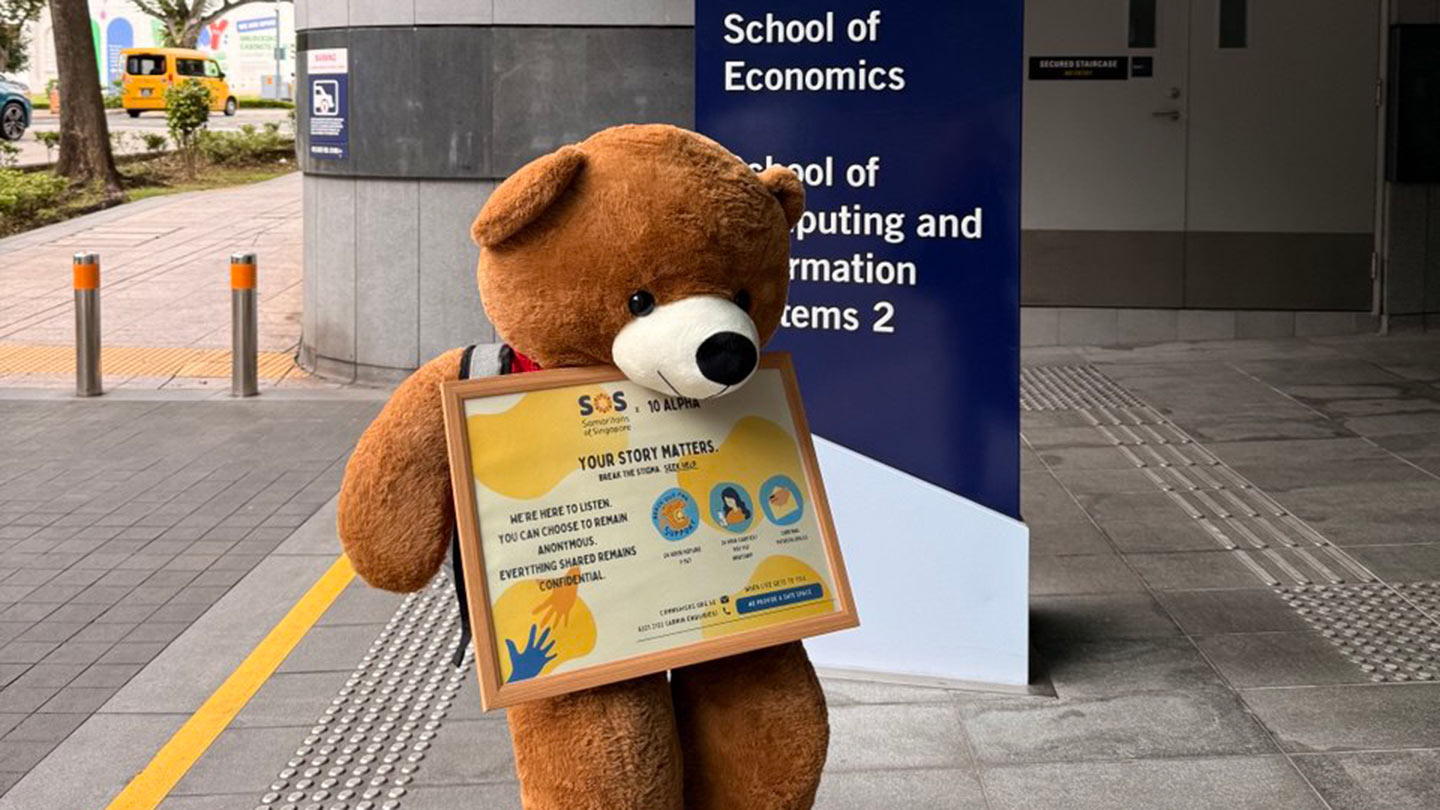
What happens when students use statistics to amplify the voices of a community? This SMU-X project in collaboration with the Samaritans of Singapore, transformed statistical learning into a movement for suicide prevention and mental health advocacy.
- Pioneered Singapore’s first national suicide stigma survey: Save.Me and Save.Me.Too gathered over 12,000 responses across all age groups, offering unprecedented insight into how stigma affects helpseeking and perceptions of suicide.
- Strengthened national outreach and policy conversations: Findings were adopted by SOS, featured in national media, and used to inform suicide prevention strategies across schools and community settings.
- Empowered a generation of youth advocates: Students became changemakers, initiating conversations that challenged silence, shifted mindsets, and reached thousands in Singapore and beyond.